
Whelping Log Basics for New Breeders
May 14, 2026
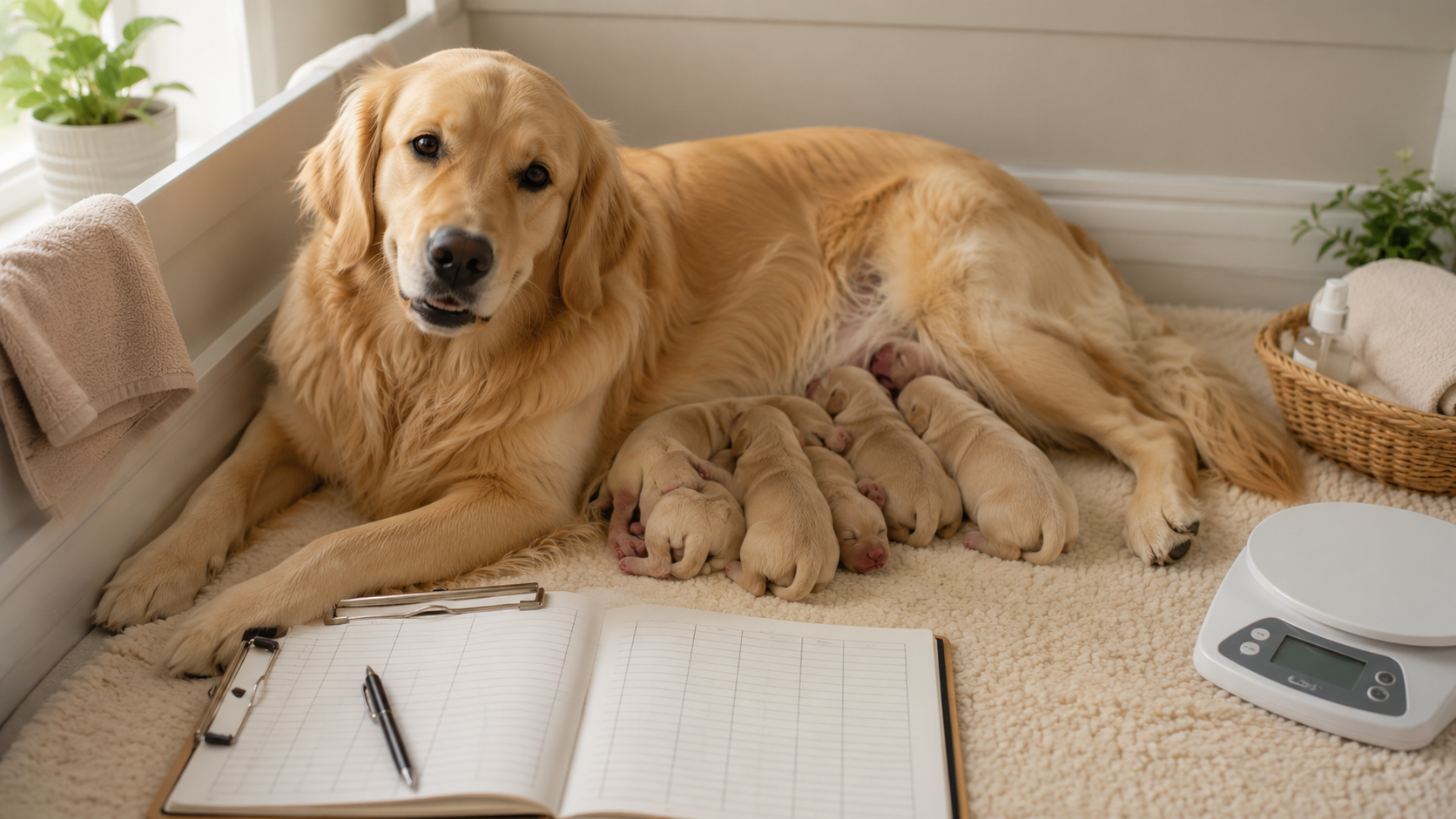
A good whelping log is not just paperwork. It is one of the most important tools a breeder can use during labor, delivery, and the first days of puppy care. When things are calm, it helps you stay organized. When things get stressful, it gives you a clear record instead of relying on memory.
For new breeders, the biggest mistake is waiting until puppies are already arriving to start writing things down. By then, you are busy watching mom, drying puppies, checking breathing, tying or trimming cords if needed, weighing newborns, changing bedding, and trying not to miss anything. Your log should be ready before labor starts.
What to Track Before Labor
Start your whelping log before the first puppy is born. Include the dam’s name, breeding dates, estimated due date, vet contact information, and any pregnancy notes. If you are tracking temperature, record the date, time, and reading each time you check it. Many dogs show a temperature drop before whelping, but it should not be treated as your only sign. Watch the whole picture: nesting, restlessness, panting, appetite changes, discharge, and behavior.
You should also note when stage-one labor signs begin. This may include panting, nesting, trembling, pacing, or wanting extra attention. Writing down the start time matters because prolonged labor can become dangerous, and your vet may ask exactly how long signs have been going on.
What to Track During Whelping
Once active labor begins, your log should become very specific. For each puppy, record:
Puppy number, birth time, sex, color or markings, birth weight, presentation if noticed, whether the puppy cried or breathed quickly, and whether the placenta was seen.
You should also record mom’s behavior between puppies. Is she calm? Pushing hard? Resting normally? Ignoring a puppy? Showing pain? Passing unusual discharge? These details matter. Weak labor for several hours without a puppy, strong contractions without delivery, heavy bleeding, foul-smelling discharge, or green discharge before the first puppy can be warning signs that need veterinary help.
Do not try to be heroic. New breeders get into trouble when they “wait and see” too long. A whelping log helps you make better calls because you can see the timeline clearly.
What to Track After Birth
After each puppy is stable, weigh it and record the number. Birth weights give you a baseline. From there, daily weigh-ins help you catch problems early. A puppy that is not gaining, is losing weight, or is getting pushed off the nipple needs attention fast.
Track nursing, supplementing, stool, warmth, and any concerns. Also note if mom eats, drinks, urinates, cleans puppies, and seems comfortable. The whelping log should continue for at least the first couple of weeks, not stop when the last puppy is born.
Why Digital Logs Help
Paper works, but it gets messy fast. A digital whelping log makes it easier to track birth times, puppy weights, notes, photos, reminders, and printable reports in one place. That matters when you are tired, running on little sleep, and trying to care for both mom and litter.
The goal is simple: keep clean records, spot problems earlier, and make better decisions.
A whelping log does not replace a veterinarian. It gives you the information you need to know when to call one. For new breeders, that can be the difference between guessing and being prepared.
For new breeders, the biggest mistake is waiting until puppies are already arriving to start writing things down. By then, you are busy watching mom, drying puppies, checking breathing, tying or trimming cords if needed, weighing newborns, changing bedding, and trying not to miss anything. Your log should be ready before labor starts.
What to Track Before Labor
Start your whelping log before the first puppy is born. Include the dam’s name, breeding dates, estimated due date, vet contact information, and any pregnancy notes. If you are tracking temperature, record the date, time, and reading each time you check it. Many dogs show a temperature drop before whelping, but it should not be treated as your only sign. Watch the whole picture: nesting, restlessness, panting, appetite changes, discharge, and behavior.
You should also note when stage-one labor signs begin. This may include panting, nesting, trembling, pacing, or wanting extra attention. Writing down the start time matters because prolonged labor can become dangerous, and your vet may ask exactly how long signs have been going on.
What to Track During Whelping
Once active labor begins, your log should become very specific. For each puppy, record:
Puppy number, birth time, sex, color or markings, birth weight, presentation if noticed, whether the puppy cried or breathed quickly, and whether the placenta was seen.
You should also record mom’s behavior between puppies. Is she calm? Pushing hard? Resting normally? Ignoring a puppy? Showing pain? Passing unusual discharge? These details matter. Weak labor for several hours without a puppy, strong contractions without delivery, heavy bleeding, foul-smelling discharge, or green discharge before the first puppy can be warning signs that need veterinary help.
Do not try to be heroic. New breeders get into trouble when they “wait and see” too long. A whelping log helps you make better calls because you can see the timeline clearly.
What to Track After Birth
After each puppy is stable, weigh it and record the number. Birth weights give you a baseline. From there, daily weigh-ins help you catch problems early. A puppy that is not gaining, is losing weight, or is getting pushed off the nipple needs attention fast.
Track nursing, supplementing, stool, warmth, and any concerns. Also note if mom eats, drinks, urinates, cleans puppies, and seems comfortable. The whelping log should continue for at least the first couple of weeks, not stop when the last puppy is born.
Why Digital Logs Help
Paper works, but it gets messy fast. A digital whelping log makes it easier to track birth times, puppy weights, notes, photos, reminders, and printable reports in one place. That matters when you are tired, running on little sleep, and trying to care for both mom and litter.
The goal is simple: keep clean records, spot problems earlier, and make better decisions.
A whelping log does not replace a veterinarian. It gives you the information you need to know when to call one. For new breeders, that can be the difference between guessing and being prepared.