
What to Include in a Puppy Go-Home Packet
May 12, 2026
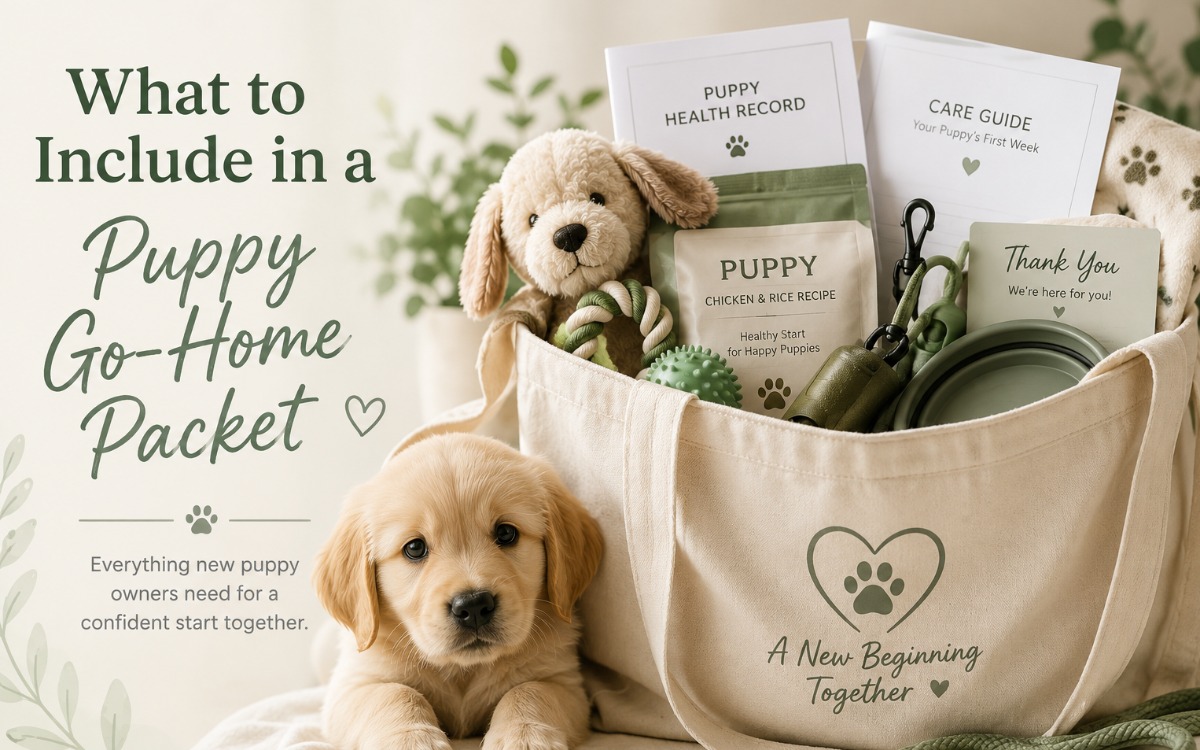
A puppy go-home packet is more than a cute extra. It helps new families feel prepared, gives the puppy a smoother transition, and makes your breeding program look more organized and professional. New puppy owners are usually excited, nervous, and overloaded with information, so the goal is simple: send them home with the essentials and clear instructions.
A nice large cloth bag is a great choice because it feels thoughtful, reusable, and more polished than handing everything over in loose pieces. It also gives your families one place to keep the puppy’s food, paperwork, toys, and starter supplies.
Start With the Puppy’s Current Food
Food should be one of the first things in the bag. Even if the family plans to switch brands later, they need enough of the puppy’s current food to transition slowly. A sudden food change can cause stomach upset, diarrhea, and unnecessary stress.
Include a printed feeding guide with the brand name, how much the puppy is currently eating, how often they are being fed, and any notes about soaking food or adding supplements. Do not assume families will remember everything you tell them at pickup. They probably will not.
Add a Familiar Toy or Comfort Item
A toy that smells like the litter can be a big comfort during the first few nights. Puppies are leaving their mother, siblings, and familiar space, so a soft toy, blanket, or small comfort item can help them settle.
This does not need to be expensive. What matters is that it is safe, puppy-appropriate, and familiar. Avoid anything with small parts, strings, or pieces that could be chewed off and swallowed.
Include Starter Supplies
A good go-home bag can include practical starter items such as training treats, a chew toy, waste bags, a small grooming brush, potty pads, or a sample of puppy-safe wipes. These small items help the new owner get through the first few days without scrambling.
Keep it useful. Random filler makes the bag look cute but does not actually help. New families need things they can use right away.
Paperwork Matters
The paperwork is where a lot of breeders drop the ball. Do not send families home with a bag full of cute stuff and messy records.
Your packet should include vaccination and deworming records, microchip information if applicable, registration details, a health guarantee or contract copy, vet visit information, feeding instructions, and your contact information. You can also include a simple puppy schedule covering meals, potty breaks, crate time, and bedtime.
This is where PuppyNest-style organization matters. Clean records make you look serious. Sloppy records make people question everything else.
Add a Simple First Week Guide
The first week is usually the hardest for new puppy owners. Include a short guide explaining what to expect: crying at night, potty accidents, adjustment stress, eating changes, crate training basics, and when to call a vet.
Keep it calm and realistic. Do not make puppy ownership sound effortless. That sets families up to feel like they are failing. Tell them the truth: the first few days can be messy, but consistency helps.
Make the Bag Feel Like Your Brand
The cloth bag itself can become part of your breeder brand. Add a small thank-you card, your logo, social media handles, website, and a reminder to send updates. Families love feeling like they are part of something, not just completing a transaction.
A strong go-home packet says: “We cared about this puppy before pickup, and we are still supporting you after pickup.”
That is the standard good breeders should be aiming for.
A nice large cloth bag is a great choice because it feels thoughtful, reusable, and more polished than handing everything over in loose pieces. It also gives your families one place to keep the puppy’s food, paperwork, toys, and starter supplies.
Start With the Puppy’s Current Food
Food should be one of the first things in the bag. Even if the family plans to switch brands later, they need enough of the puppy’s current food to transition slowly. A sudden food change can cause stomach upset, diarrhea, and unnecessary stress.
Include a printed feeding guide with the brand name, how much the puppy is currently eating, how often they are being fed, and any notes about soaking food or adding supplements. Do not assume families will remember everything you tell them at pickup. They probably will not.
Add a Familiar Toy or Comfort Item
A toy that smells like the litter can be a big comfort during the first few nights. Puppies are leaving their mother, siblings, and familiar space, so a soft toy, blanket, or small comfort item can help them settle.
This does not need to be expensive. What matters is that it is safe, puppy-appropriate, and familiar. Avoid anything with small parts, strings, or pieces that could be chewed off and swallowed.
Include Starter Supplies
A good go-home bag can include practical starter items such as training treats, a chew toy, waste bags, a small grooming brush, potty pads, or a sample of puppy-safe wipes. These small items help the new owner get through the first few days without scrambling.
Keep it useful. Random filler makes the bag look cute but does not actually help. New families need things they can use right away.
Paperwork Matters
The paperwork is where a lot of breeders drop the ball. Do not send families home with a bag full of cute stuff and messy records.
Your packet should include vaccination and deworming records, microchip information if applicable, registration details, a health guarantee or contract copy, vet visit information, feeding instructions, and your contact information. You can also include a simple puppy schedule covering meals, potty breaks, crate time, and bedtime.
This is where PuppyNest-style organization matters. Clean records make you look serious. Sloppy records make people question everything else.
Add a Simple First Week Guide
The first week is usually the hardest for new puppy owners. Include a short guide explaining what to expect: crying at night, potty accidents, adjustment stress, eating changes, crate training basics, and when to call a vet.
Keep it calm and realistic. Do not make puppy ownership sound effortless. That sets families up to feel like they are failing. Tell them the truth: the first few days can be messy, but consistency helps.
Make the Bag Feel Like Your Brand
The cloth bag itself can become part of your breeder brand. Add a small thank-you card, your logo, social media handles, website, and a reminder to send updates. Families love feeling like they are part of something, not just completing a transaction.
A strong go-home packet says: “We cared about this puppy before pickup, and we are still supporting you after pickup.”
That is the standard good breeders should be aiming for.