
How to Track a Dog Heat Cycle Without Feeling Overwhelmed
May 11, 2026
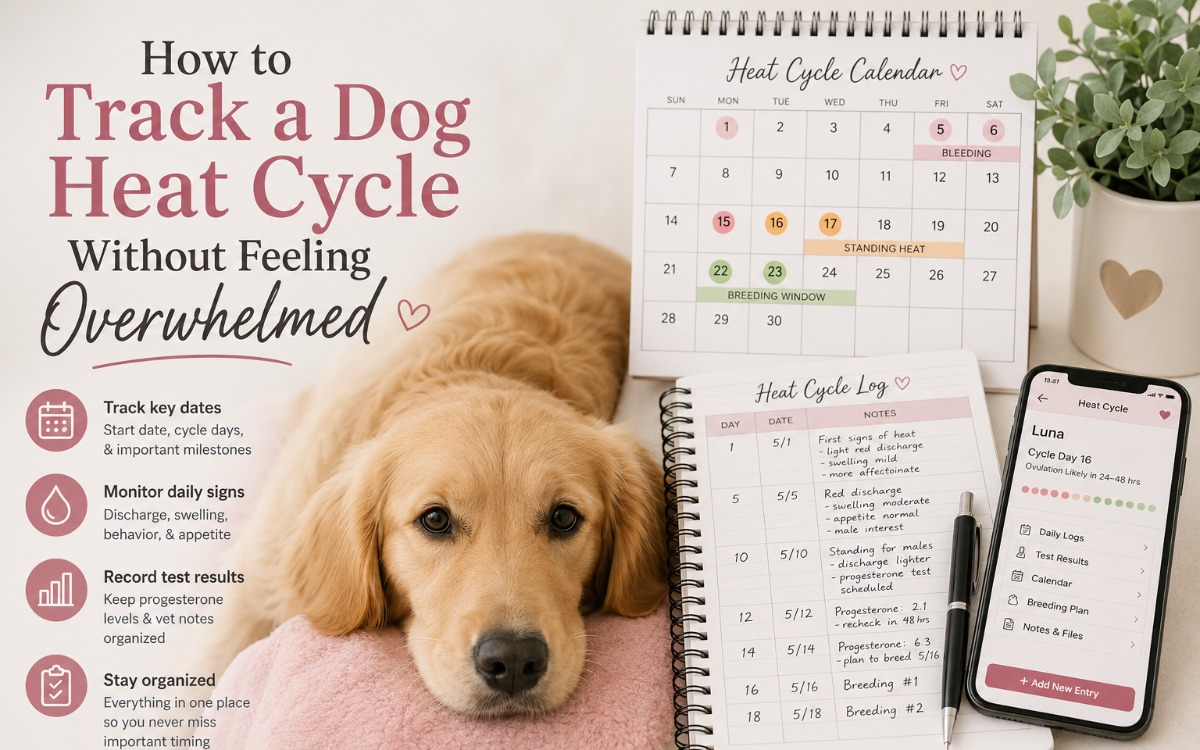
Tracking a dog’s heat cycle sounds simple until you are actually doing it. Then suddenly you are trying to remember dates, watch behavior changes, track discharge, schedule progesterone tests, plan breeding timing, and keep notes that actually make sense later.
The problem is not that heat cycle tracking is too hard. The problem is that most breeders try to track it in a messy way.
Scraps of paper, phone notes, memory, screenshots, and random calendar reminders are not a system. They are how you end up second-guessing yourself when timing matters.
Start With the First Day You Notice Signs
The first thing to record is the day you notice the heat cycle starting. This is usually when you see swelling, discharge, extra licking, flagging, behavior changes, or increased interest from males.
Do not wait until you are “sure.” Write it down anyway. You can always adjust your notes later, but you cannot recreate the timeline accurately from memory.
A basic entry should include:
Date, cycle day, discharge color, swelling, behavior, appetite, and any male interest.
That alone gives you a cleaner picture than guessing.
Keep Daily Notes Short
New breeders often overcomplicate this part. You do not need to write a full story every day. You need consistent notes.
For example:
“Day 5 — light red discharge, swelling moderate, appetite normal, more affectionate.”
That is enough. The goal is to create a pattern you can review later, not write a diary.
The biggest mistake is tracking too much one day and nothing the next. Keep it simple so you actually stick with it.
Track Progesterone Results Clearly
If you are doing progesterone testing, record every result with the date, cycle day, number, and vet notes. Do not just save a photo of the result and assume you will remember the context later.
A good progesterone log should show:
Test date, cycle day, progesterone level, vet recommendation, next test date, and breeding plan.
This is where sloppy tracking gets expensive. Missed timing can mean missed breedings, wasted stud fees, unnecessary stress, and disappointed families.
Use Flags for Important Changes
Not every note is equally important. Some things need to stand out, such as:
Bleeding changes, standing heat, flagging, appetite drops, unusual discharge, progesterone jumps, planned breeding dates, and vet instructions.
Flags help you quickly see what matters without digging through every daily note.
Compare Cycles Over Time
One heat cycle is useful. Multiple tracked cycles are powerful.
Over time, you can start seeing patterns. Maybe one dog tends to ovulate later. Maybe another has a shorter cycle. Maybe one shows obvious signs while another barely changes behavior at all.
That history makes future planning easier and less stressful.
Keep Everything in One Place
This is the part most breeders need to hear: if your heat cycle notes are scattered across three apps, a calendar, texts, and paper, your system is already broken.
Keep the cycle start date, daily notes, progesterone results, breeding dates, reminders, and printable reports in one organized place.
That is exactly the kind of problem PuppyNest is built to solve. Instead of trying to remember everything, you track the cycle step by step and build a clean record as you go.
Final Thought
Heat cycle tracking does not have to feel overwhelming. The key is consistency, not perfection.
Start with the first sign. Add short daily notes. Record test results clearly. Flag important changes. Keep everything together.
The more organized your records are, the less you have to rely on memory — and in breeding, memory is not good enough.
The problem is not that heat cycle tracking is too hard. The problem is that most breeders try to track it in a messy way.
Scraps of paper, phone notes, memory, screenshots, and random calendar reminders are not a system. They are how you end up second-guessing yourself when timing matters.
Start With the First Day You Notice Signs
The first thing to record is the day you notice the heat cycle starting. This is usually when you see swelling, discharge, extra licking, flagging, behavior changes, or increased interest from males.
Do not wait until you are “sure.” Write it down anyway. You can always adjust your notes later, but you cannot recreate the timeline accurately from memory.
A basic entry should include:
Date, cycle day, discharge color, swelling, behavior, appetite, and any male interest.
That alone gives you a cleaner picture than guessing.
Keep Daily Notes Short
New breeders often overcomplicate this part. You do not need to write a full story every day. You need consistent notes.
For example:
“Day 5 — light red discharge, swelling moderate, appetite normal, more affectionate.”
That is enough. The goal is to create a pattern you can review later, not write a diary.
The biggest mistake is tracking too much one day and nothing the next. Keep it simple so you actually stick with it.
Track Progesterone Results Clearly
If you are doing progesterone testing, record every result with the date, cycle day, number, and vet notes. Do not just save a photo of the result and assume you will remember the context later.
A good progesterone log should show:
Test date, cycle day, progesterone level, vet recommendation, next test date, and breeding plan.
This is where sloppy tracking gets expensive. Missed timing can mean missed breedings, wasted stud fees, unnecessary stress, and disappointed families.
Use Flags for Important Changes
Not every note is equally important. Some things need to stand out, such as:
Bleeding changes, standing heat, flagging, appetite drops, unusual discharge, progesterone jumps, planned breeding dates, and vet instructions.
Flags help you quickly see what matters without digging through every daily note.
Compare Cycles Over Time
One heat cycle is useful. Multiple tracked cycles are powerful.
Over time, you can start seeing patterns. Maybe one dog tends to ovulate later. Maybe another has a shorter cycle. Maybe one shows obvious signs while another barely changes behavior at all.
That history makes future planning easier and less stressful.
Keep Everything in One Place
This is the part most breeders need to hear: if your heat cycle notes are scattered across three apps, a calendar, texts, and paper, your system is already broken.
Keep the cycle start date, daily notes, progesterone results, breeding dates, reminders, and printable reports in one organized place.
That is exactly the kind of problem PuppyNest is built to solve. Instead of trying to remember everything, you track the cycle step by step and build a clean record as you go.
Final Thought
Heat cycle tracking does not have to feel overwhelming. The key is consistency, not perfection.
Start with the first sign. Add short daily notes. Record test results clearly. Flag important changes. Keep everything together.
The more organized your records are, the less you have to rely on memory — and in breeding, memory is not good enough.