
How to Prepare for Your Dog’s First Litter
May 26, 2026
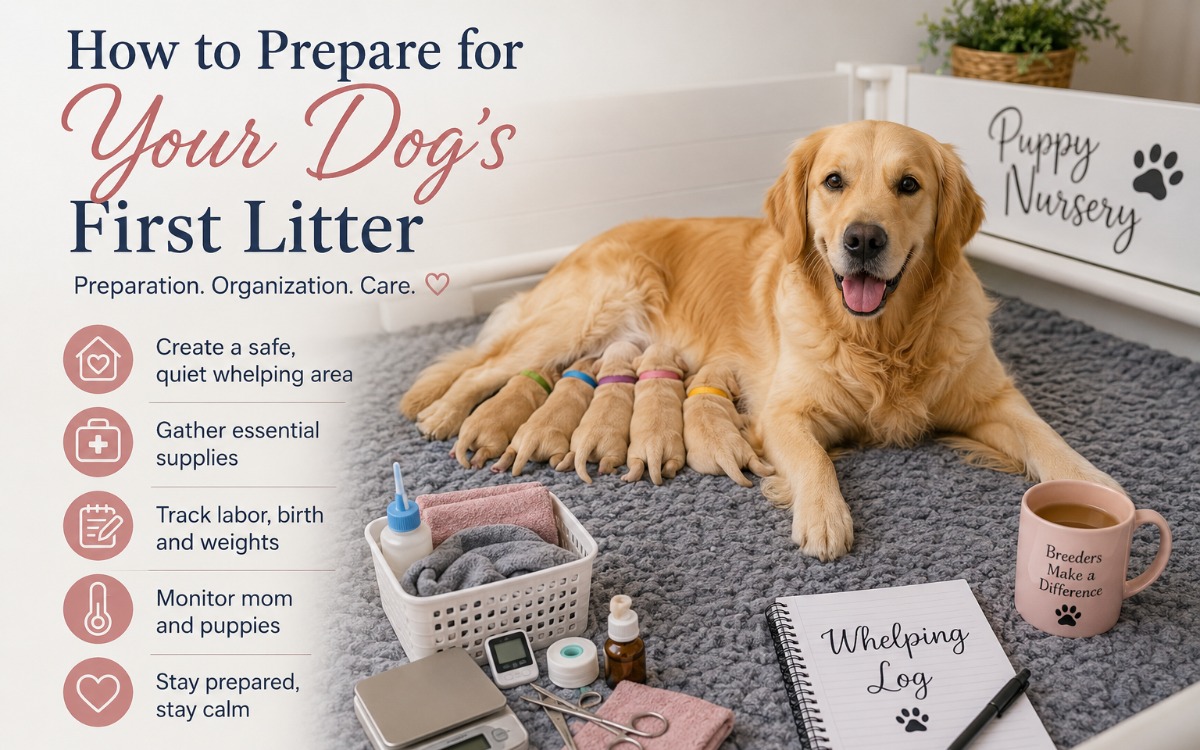
A Beginner-Friendly Guide to Whelping Preparation, Puppy Care, and Staying Organized
Preparing for your dog’s first litter is exciting, emotional, and often a little overwhelming. Most breeders spend months planning pedigrees, researching health testing, gathering supplies, and imagining tiny puppies curled beside their mother. But once the due date starts approaching, many first-time breeders realize just how much preparation truly goes into whelping and raising a litter responsibly.
The good news is that you do not need to have everything perfect to provide excellent care. Preparation is less about creating a flawless setup and more about creating a calm, safe environment where both the mother and puppies can thrive.
Whether you are preparing for your first litter now or simply learning ahead of time, this guide walks through the basics of whelping preparation, essential supplies, newborn puppy care, and breeder organization tools that can help make the process smoother.
Start Preparing Early
One of the biggest mistakes new breeders make is waiting too long to prepare for labor. Puppies rarely arrive exactly when it feels convenient, and the final days of pregnancy can become hectic very quickly.
Most breeders begin preparing their whelping area at least 1–2 weeks before the expected due date.
This gives the mother time to:
Become comfortable in the space
Adjust to the whelping box
Relax into a predictable environment
Reduce stress before labor begins
Dogs often seek quiet, secure spaces when preparing to whelp, so keeping the area calm and low-stress matters more than creating an elaborate setup.
Creating a Safe Whelping Area
Your whelping setup does not need to be fancy. It simply needs to be safe, clean, warm, and easy to monitor.
A proper whelping area should:
Be in a quiet part of the home
Stay comfortably warm
Be easy to sanitize
Allow enough space for mom to stretch comfortably
Include pig rails or barriers to help prevent puppies from being accidentally crushed
Many breeders prefer raising litters inside the home where puppies become familiar with everyday household sounds, smells, and routines from the very beginning.
This early exposure often helps puppies grow into more adaptable and socially confident companions later.
Essential Whelping Supplies
Having supplies prepared ahead of time helps reduce stress once labor begins.
Basic whelping supplies include:
For Mom
Thermometer
Fresh water bowls
Easily digestible food
Washable bedding
Heating support if needed
Calcium supplement only if advised by your veterinarian
For Puppies
Digital kitchen scale
Puppy-safe heating pad
Bulb syringe
Clean towels and washcloths
Hemostats
Sterile scissors
Iodine for umbilical cords
Puppy collars or identification ribbons
For Record Keeping
Whelping log
Weight tracking chart
Notebook or digital tracking app
Emergency veterinary contacts
Some breeders now use breeder management tools like PuppyNest to organize:
Heat cycles
Whelping notes
Puppy weights
Medication schedules
Feeding records
Veterinary reminders
Having everything centralized can make those long nights feel far less chaotic.
Understanding the Signs of Labor
As labor approaches, many dogs begin showing behavioral and physical changes.
Common signs include:
Restlessness
Panting
Nesting behavior
Refusing food
Clinginess
Shivering
Temperature drop
Many breeders track rectal temperatures during the final days of pregnancy because a noticeable drop often occurs roughly 12–24 hours before labor begins.
However, every dog is different, and labor does not always follow a textbook timeline.
During Labor: Stay Calm and Observe
One of the hardest parts of first-time breeding is learning when to help and when to simply observe.
Most mothers instinctively know what to do. Puppies may arrive quickly, or labor may progress more slowly with periods of rest between deliveries.
During labor, breeders should monitor:
Time between puppies
Strength of contractions
Puppy responsiveness
Nursing success
Mom’s comfort level
Keeping detailed notes helps identify patterns and provides useful information if veterinary assistance becomes necessary.
Why Record Keeping Matters
Sleep deprivation makes even simple details hard to remember after several hours awake with a laboring dog.
Keeping organized records allows breeders to:
Track birth order
Monitor puppy weights
Watch nursing behavior
Record medication times
Identify puppies needing extra support
Even experienced breeders rely heavily on written or digital records during whelping.
This is one reason many breeders are moving toward digital tracking systems like PuppyNest, which help simplify litter management and reduce the stress of juggling notebooks, sticky notes, and scattered paperwork.
The First 72 Hours Matter Most
The first few days after birth are incredibly important for both the mother and puppies.
During this time, breeders closely monitor:
Nursing
Weight gain
Body temperature
Hydration
Crying or weakness
Mom’s recovery
Healthy puppies should nurse frequently, sleep quietly between feedings, and steadily gain weight.
A digital scale quickly becomes one of the most important tools in the room.
Common Mistakes New Breeders Make
Every breeder learns through experience, but some common mistakes include:
Overhandling puppies too early
Keeping the whelping area too cold
Failing to track daily weights
Panicking during normal labor pauses
Waiting too long to call the veterinarian during emergencies
Not preparing supplies ahead of time
The goal is not perfection. The goal is being attentive, prepared, and willing to learn.
Building Confidence as a New Breeder
The truth is that no breeder ever feels fully prepared for their very first litter.
There is a learning curve to whelping, newborn care, and the emotional responsibility that comes with bringing puppies into the world. Every litter teaches something new.
The most important things you can bring into the whelping box are:
Patience
Observation
Organization
Willingness to ask questions
A commitment to learning
Responsible breeding is not about having all the answers immediately. It is about continuing to grow in knowledge while always putting the wellbeing of the dogs first.
Final Thoughts
Preparing for your dog’s first litter can feel overwhelming at times, but thoughtful preparation makes an enormous difference. A calm environment, organized supplies, accurate record keeping, and close observation help create a safer experience for both mother and puppies.
Whether you use a traditional binder or a breeder management app like PuppyNest, staying organized allows you to focus on what matters most: supporting the dogs in your care during one of the most important moments of their lives.
Preparing for your dog’s first litter is exciting, emotional, and often a little overwhelming. Most breeders spend months planning pedigrees, researching health testing, gathering supplies, and imagining tiny puppies curled beside their mother. But once the due date starts approaching, many first-time breeders realize just how much preparation truly goes into whelping and raising a litter responsibly.
The good news is that you do not need to have everything perfect to provide excellent care. Preparation is less about creating a flawless setup and more about creating a calm, safe environment where both the mother and puppies can thrive.
Whether you are preparing for your first litter now or simply learning ahead of time, this guide walks through the basics of whelping preparation, essential supplies, newborn puppy care, and breeder organization tools that can help make the process smoother.
Start Preparing Early
One of the biggest mistakes new breeders make is waiting too long to prepare for labor. Puppies rarely arrive exactly when it feels convenient, and the final days of pregnancy can become hectic very quickly.
Most breeders begin preparing their whelping area at least 1–2 weeks before the expected due date.
This gives the mother time to:
Become comfortable in the space
Adjust to the whelping box
Relax into a predictable environment
Reduce stress before labor begins
Dogs often seek quiet, secure spaces when preparing to whelp, so keeping the area calm and low-stress matters more than creating an elaborate setup.
Creating a Safe Whelping Area
Your whelping setup does not need to be fancy. It simply needs to be safe, clean, warm, and easy to monitor.
A proper whelping area should:
Be in a quiet part of the home
Stay comfortably warm
Be easy to sanitize
Allow enough space for mom to stretch comfortably
Include pig rails or barriers to help prevent puppies from being accidentally crushed
Many breeders prefer raising litters inside the home where puppies become familiar with everyday household sounds, smells, and routines from the very beginning.
This early exposure often helps puppies grow into more adaptable and socially confident companions later.
Essential Whelping Supplies
Having supplies prepared ahead of time helps reduce stress once labor begins.
Basic whelping supplies include:
For Mom
Thermometer
Fresh water bowls
Easily digestible food
Washable bedding
Heating support if needed
Calcium supplement only if advised by your veterinarian
For Puppies
Digital kitchen scale
Puppy-safe heating pad
Bulb syringe
Clean towels and washcloths
Hemostats
Sterile scissors
Iodine for umbilical cords
Puppy collars or identification ribbons
For Record Keeping
Whelping log
Weight tracking chart
Notebook or digital tracking app
Emergency veterinary contacts
Some breeders now use breeder management tools like PuppyNest to organize:
Heat cycles
Whelping notes
Puppy weights
Medication schedules
Feeding records
Veterinary reminders
Having everything centralized can make those long nights feel far less chaotic.
Understanding the Signs of Labor
As labor approaches, many dogs begin showing behavioral and physical changes.
Common signs include:
Restlessness
Panting
Nesting behavior
Refusing food
Clinginess
Shivering
Temperature drop
Many breeders track rectal temperatures during the final days of pregnancy because a noticeable drop often occurs roughly 12–24 hours before labor begins.
However, every dog is different, and labor does not always follow a textbook timeline.
During Labor: Stay Calm and Observe
One of the hardest parts of first-time breeding is learning when to help and when to simply observe.
Most mothers instinctively know what to do. Puppies may arrive quickly, or labor may progress more slowly with periods of rest between deliveries.
During labor, breeders should monitor:
Time between puppies
Strength of contractions
Puppy responsiveness
Nursing success
Mom’s comfort level
Keeping detailed notes helps identify patterns and provides useful information if veterinary assistance becomes necessary.
Why Record Keeping Matters
Sleep deprivation makes even simple details hard to remember after several hours awake with a laboring dog.
Keeping organized records allows breeders to:
Track birth order
Monitor puppy weights
Watch nursing behavior
Record medication times
Identify puppies needing extra support
Even experienced breeders rely heavily on written or digital records during whelping.
This is one reason many breeders are moving toward digital tracking systems like PuppyNest, which help simplify litter management and reduce the stress of juggling notebooks, sticky notes, and scattered paperwork.
The First 72 Hours Matter Most
The first few days after birth are incredibly important for both the mother and puppies.
During this time, breeders closely monitor:
Nursing
Weight gain
Body temperature
Hydration
Crying or weakness
Mom’s recovery
Healthy puppies should nurse frequently, sleep quietly between feedings, and steadily gain weight.
A digital scale quickly becomes one of the most important tools in the room.
Common Mistakes New Breeders Make
Every breeder learns through experience, but some common mistakes include:
Overhandling puppies too early
Keeping the whelping area too cold
Failing to track daily weights
Panicking during normal labor pauses
Waiting too long to call the veterinarian during emergencies
Not preparing supplies ahead of time
The goal is not perfection. The goal is being attentive, prepared, and willing to learn.
Building Confidence as a New Breeder
The truth is that no breeder ever feels fully prepared for their very first litter.
There is a learning curve to whelping, newborn care, and the emotional responsibility that comes with bringing puppies into the world. Every litter teaches something new.
The most important things you can bring into the whelping box are:
Patience
Observation
Organization
Willingness to ask questions
A commitment to learning
Responsible breeding is not about having all the answers immediately. It is about continuing to grow in knowledge while always putting the wellbeing of the dogs first.
Final Thoughts
Preparing for your dog’s first litter can feel overwhelming at times, but thoughtful preparation makes an enormous difference. A calm environment, organized supplies, accurate record keeping, and close observation help create a safer experience for both mother and puppies.
Whether you use a traditional binder or a breeder management app like PuppyNest, staying organized allows you to focus on what matters most: supporting the dogs in your care during one of the most important moments of their lives.